
Raise your hand if you’ve used an AI tool to write.
If you have and still do, there’s nothing to be ashamed of. But before you publish or give your client an article you used AI to help you write, remember to humanize and carefully assess it first. Detecting AI content and plagiarism in your written masterpiece is an ideal step to begin with. Here are simple but effective ways to help you distinguish what’s written by a real person and what’s generated by an AI model:
Use AI detector tools.
Relying on AI writing detectors to catch AI generated content may sound ironic, but it’s an easy method to check if a human or an AI writer has crafted the article. All you have to do is enter your content and hit a button to run the test. In a matter of seconds, these tools can determine how much percentage of the text is considered human-written.
However, there’s a catch: these AI detectors are not 100% accurate and reliable. They often flag content, even when a human author ultimately writes it.
After all, like any other AI-powered software, these detectors depend only on machine learning and natural language processing and lack the human ability to catch the tell-tale signs of AI writing. Regardless, they are better off used as a supplementary decision-making tool.
Check for repetitive writing.
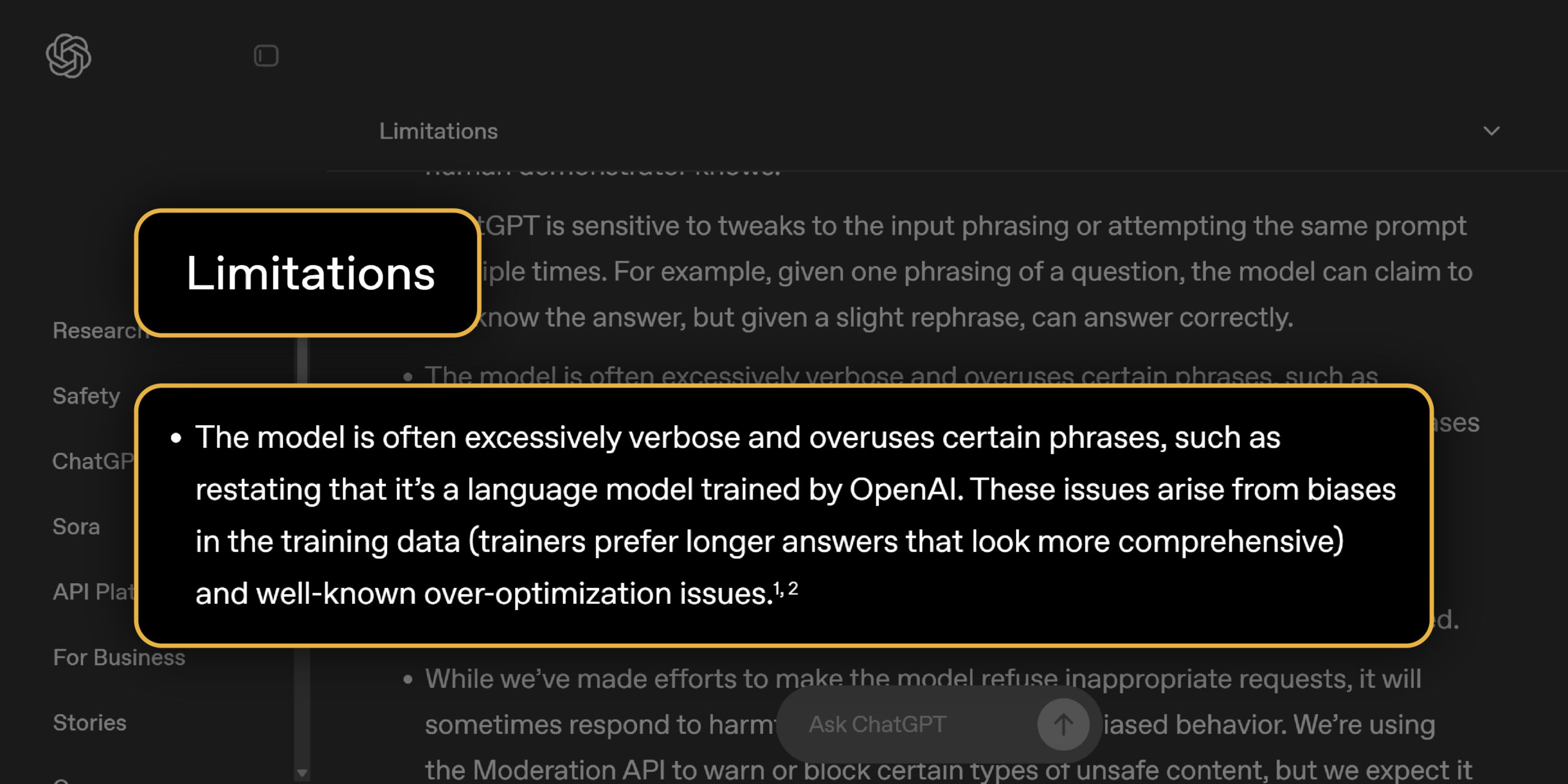
AI content tends to be too wordy, and this can be attributed to the repetitive use of words and phrases. These tools also habitually repeat ideas across different paragraphs, albeit in different sentence structures.
OpenAI, the artificial intelligence research organization behind ChatGPT and SearchGPT, has acknowledged this in one of their blogs, citing that repetitive writing as one of its model’s limitations:
Watch out for overused AI words and phrases.
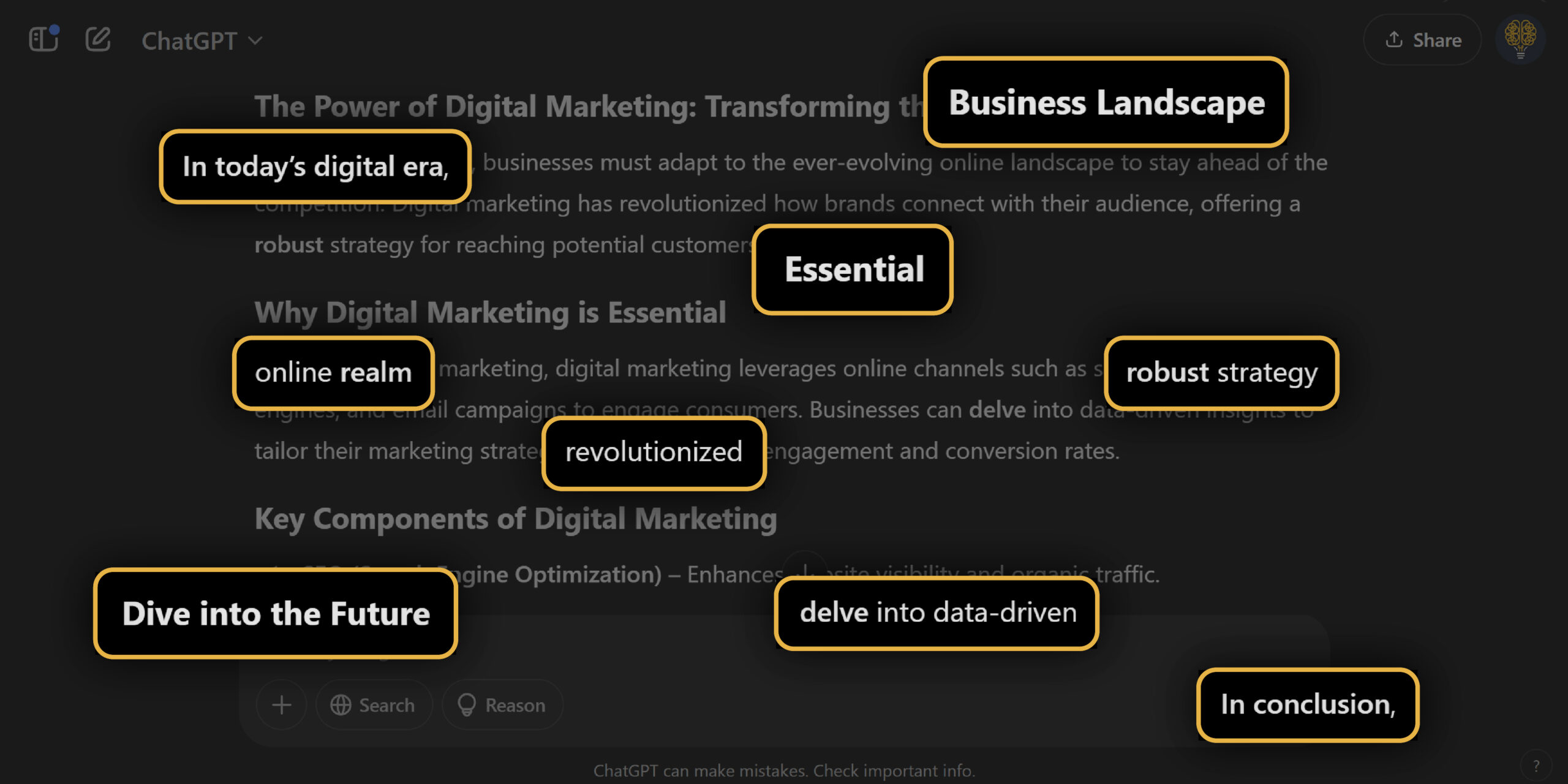
In relation to the repeated use of words, AI writing tools also have a habit of extensively using so-called AI words and phrases. They are called as such because they usually appear in almost every generated content, so much so that the text no longer sounds organic or relatable.
Some of the words and phrases you’ll likely encounter in AI writing are:
Look for inaccurate facts and outdated details.
While AI models can provide well-written texts, some of the information they include can be misleading or questionable. Worse, they don’t include attributions or accurate sources to back these claims.
Keep in mind that AI tools learn from the data sets they are fed, so cross-checking the claims they make should be a top priority when you use them for writing. This will ensure your content is not only informative but, more importantly, reliable.
Assess the level of subject matter expertise.
AI models tend to lack the depth of human understanding of certain subjects, and this is often reflected in the content they generate.
Here’s an example where ChatGPT was asked to write a text to help potential buyers decide which of the two Lego sets to purchase:
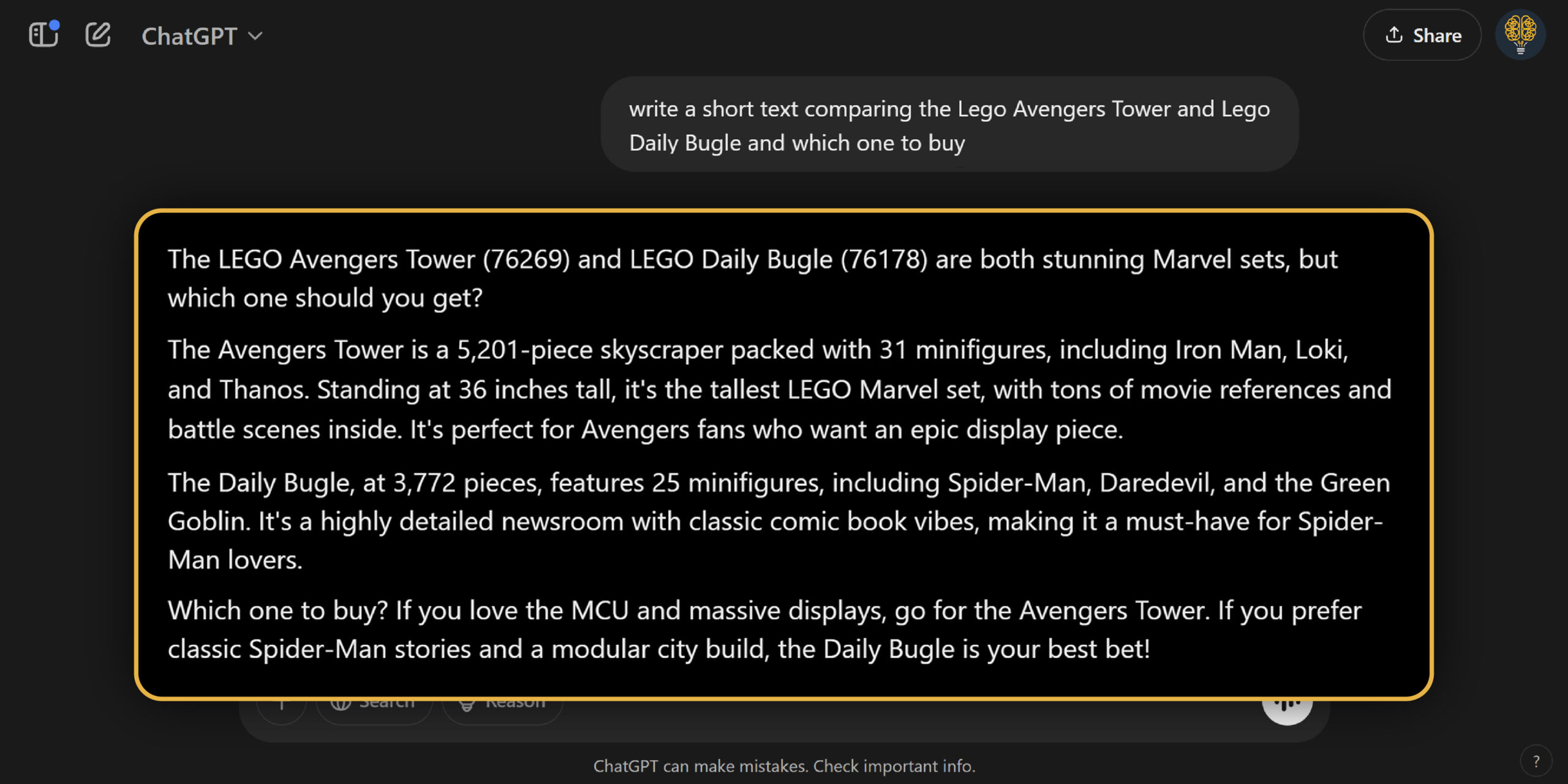
This text shows only the product details that are available on the Lego website, and it fails to give the feeling that the author truly knows these sets.
For instance, a Lego enthusiast or collector would tell you that The Avengers Tower is the only set in which Helen Cho and Dr. Erik Selvig appear. At the same time, The Daily Bugle could be the first and last set you could get a Punisher minifigure from due to the comic character’s violent nature.
Spot personal stories or experiences.
One of the limitations of AI content is its inability to connect to readers personally, be it the lack of humor, empathy, or anecdotes. Although AI writing tools can vary the tone they use when generating texts, they fail to convincingly express personal opinions or emotions that human writers typically have.
Using the example of the Lego Marvel sets, the AI writer didn’t highlight how building both sets could be repetitive. A human writer would tell you which of the two sets are more fun and satisfying to build, which requires more time and patience, or which parts of each set are their favorite.
If the content is rather generic or gives an impression the author lacks first-hand experience, do research, ask experts, and revise the content.
Should you avoid AI generated text?
Using AI tools to generate content for digital marketing is not frowned upon. Even Google allows it, but with the caveat that it should not be used to manipulate search engine rankings. However, populating a website with pages and pages of AI written text without humanizing them is detrimental to your marketing goals.
If your content, regardless of how it was made, is plagiarized, low quality, or non-people-first, and if it does not demonstrate E-E-A-T (experience, expertise, authoritativeness, and trustworthiness) qualities, then it will perform poorly on Google Search. Worse, it may also fail to meet user search intent.
Remember that humanizing AI content should always be on your to-do list, whether writing for clients, accepting article submissions, or adding new content to your website.
Struggling with writing quality content?
Take a break from content creation by letting the experts handle your content marketing needs. Book a meeting with the Lumenvo team, and we’ll find ways to help make your marketing goals a reality.
Blog Categories
Digital Marketing Guides
Digital Marketing Guides
READ MOREDesign Guides
Design Guides
READ MORELife at Lumenvo
Life at Lumenvo
READ MOREWeb Development Guides
Web Development Guides
READ MOREKeeping Up with Google
Keeping Up with Google
READ MOREAbout
Lumenvo elevates your business through cost-effective, superior-quality digital services that value the human connection in today’s digital world.
Explore
Contact
-
2856 Johnson Ferry Rd.
Suite 250
Marietta, GA 30062 - help@lumenvo.com
- (678) 856-3297


Copyright © 2023 Lumenvo Digital Marketing Agency. All rights reserved.