
Segmenting customers helps you determine which strategies and campaigns effectively connect to your audience.
Achieving success also hinges on understanding your customers, and customer segmentation is a powerful tool for doing just that. This guide will examine the importance of customer segmentation in digital marketing and provide practical steps for its effective implementation.
What is Customer Segmentation?
Customer segmentation is grouping existing and potential customers based on shared characteristics. It activates your marketing or sales teams to streamline strategies, create accurate buyer personas, and enhance customer retention.
Why is Customer Segmentation Important?
Segmenting your audience helps create targeted messaging that resonates with different groups and develop personalized marketing strategies and offers that improve customer satisfaction and loyalty.
Besides these, it also helps you allocate resources more efficiently, tailor products or services to meet diverse customer demands, and ultimately drive higher sales and profitability. By identifying distinct customer segments, you can also uncover new opportunities for growth and innovation, staying competitive in the market.
Customer Segmentation vs. Market Segmentation
Often confused with one another and used interchangeably, customer segmentation and market segmentation overlap in the sense that both aim to define customers, but each has a few distinct purposes.

Customer segmentation involves breaking down a segment of your market into distinct user-based categories and clustering customers who share common traits. This process leverages detailed customer data to enhance strategy precision and effectiveness.
On the other hand, market segmentation adopts a comprehensive view by analyzing the entire market. By organizing customers based on the specific products or services they choose, businesses can form the basis of their marketing and sales tactics.
Types of Customer Segmentation
Understanding the six types of customer segmentation is crucial for creating effective marketing strategies. Here are the most widely used types you can apply for your business:
- Demographic Segmentation categorizes customers based on characteristics, including age, gender, income, and education.
- Geographic Segmentation divides the market by location, allowing businesses to target specific areas.
- Psychographic Segmentation groups customers by lifestyle, values, and interests, revealing deeper motivations and attitudes.
- Behavioral Segmentation focuses on customer behaviors and product interactions, such as purchase history and brand loyalty.
- Needs-based Segmentation identifies and addresses specific customer needs and pain points.
- Technographic Segmentation classifies customers based on their technology usage and preferences, which is especially useful for tech-focused products and services.
How to Segment Customers
Follow these fundamental steps to effectively leverage customer segmentation, refine your marketing approaches, and cater to diverse customer needs while achieving your strategic business objectives.
1. Identify your segmentation goals.
Begin by determining what you need to segment customers for. Do you plan to expand your business or introduce new products? Knowing your targets will help you determine the customer segmentation types to focus on and assign them to their individual projects.
2. Collect and analyze data.
Gather valuable information through different methods, such as demographics, behavior patterns, and preferences. You can send surveys, ask for customer feedback, use analytical tools, or monitor social media..
3. Define and profile segments.
Group customers based on shared characteristics to establish precise profiles outlining essential attributes and behaviors for each segment.
4. Select target segments.
Prioritize segments that fit well with your business goals and capabilities. Focus on those offering growth potential and effective service management.
5. Create specific marketing strategies.
Develop customized marketing approaches for each segment. These should address the customers’ unique needs and preferences to enhance engagement and profitability.
6. Refine your customer segmentation model.
Implement your strategies and continually monitor and refine them based on feedback and performance data. This will help you assess whether Segmentation is effective or still necessary.
Customer Segmentation Example
Let’s use this as an example: A coffee shop chain plans to improve its ROI and has decided to perform market research to identify key customer segments, focusing on its existing customer base.
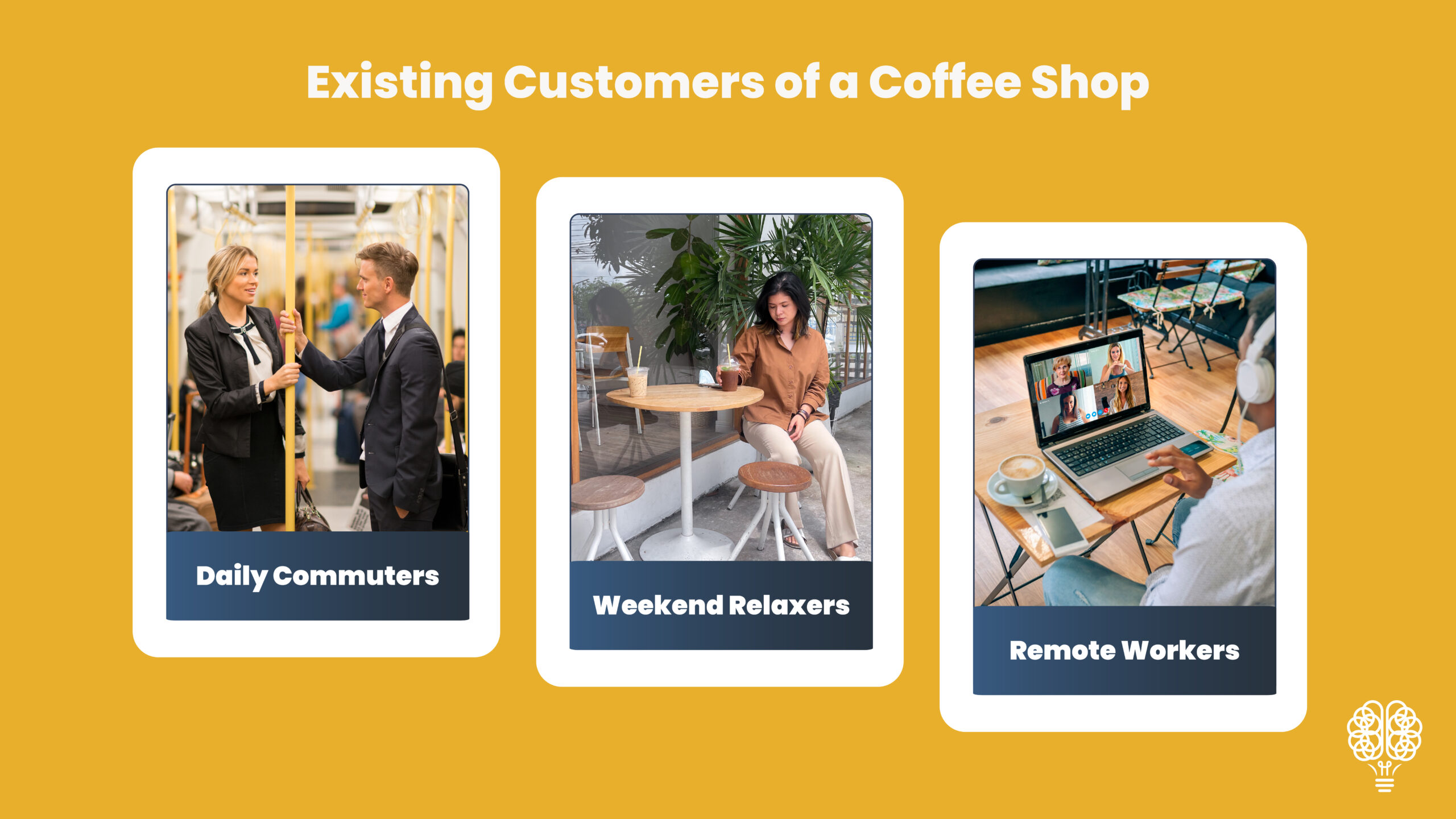
Through customer segmentation, they categorized their existing customers into three groups: daily commuters, weekend relaxers, and remote workers. Then, they used the collected data to create specific marketing strategies that directly addressed these three segments.
- For daily commuters, the shop can launch a loyalty program that offers discounts on morning purchases.
- For weekend relaxers, the shop can introduce weekend specials and play cozy, relaxing music.
- For remote workers, the shop can add bundles offering both drinks and pastries to their menu.
Segmenting customers is vital in optimizing your business’s marketing strategies. When done correctly, it can enhance customer retention, customer experience, and sales, bringing you closer to reaching your business goals.
Segment Your Customers With Lumenvo
Let us analyze your customer data and refine your strategies to effectively target key customer segments. Talk to us today so we can start improving your marketing efforts and driving meaningful results.
Blog Categories
Digital Marketing Guides
Digital Marketing Guides
READ MOREDesign Guides
Design Guides
READ MORELife at Lumenvo
Life at Lumenvo
READ MOREWeb Development Guides
Web Development Guides
READ MOREKeeping Up with Google
Keeping Up with Google
READ MOREAbout
Lumenvo elevates your business through cost-effective, superior-quality digital services that value the human connection in today’s digital world.
Explore
Contact
-
2856 Johnson Ferry Rd.
Suite 250
Marietta, GA 30062 - help@lumenvo.com
- (678) 856-3297


Copyright © 2023 Lumenvo Digital Marketing Agency. All rights reserved.